
The cost of Misogyny
There is an endless possibility to what women could really achieve.
B
Benedict Nwadike
Ogbako Umunwanyi Igbo Worldwide Foundation
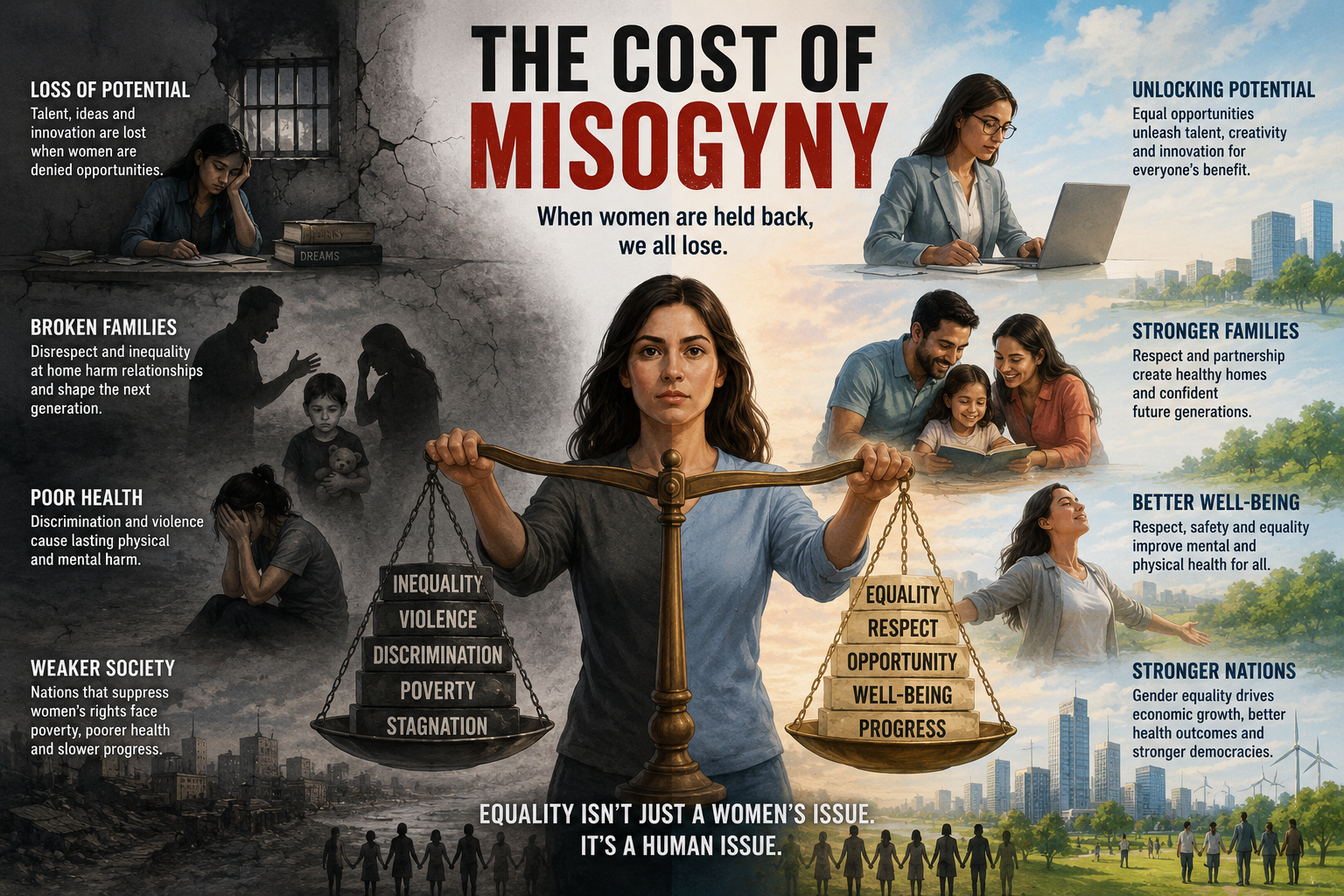
The Cost of Misogyny
Misogyny, the dislike of, contempt for, or prejudice against women, is a social problem that has existed for centuries. While many people view it as an issue that only affects women, the reality is that misogyny carries a heavy cost for everyone—individuals, families, communities, and entire nations. It limits human potential, weakens social progress, and creates divisions that hinder development.
One of the greatest costs of misogyny is the loss of talent and innovation. When women are denied equal opportunities in education, leadership, business, or politics, society misses out on valuable ideas, skills, and contributions. History has shown that when women are empowered to participate fully, economies grow stronger and communities become more resilient. Excluding half of the population from meaningful participation is not only unfair; it is economically and socially damaging.
Misogyny also affects family life. Homes where women are constantly undervalued or denied a voice often experience unhealthy relationships and emotional distress. Children raised in such environments may grow up believing that inequality is normal, perpetuating cycles of discrimination across generations. Respect and partnership within families create stronger foundations for future societies.
Another significant cost is the impact on mental and physical well-being. Women who face discrimination, harassment, or violence often experience anxiety, depression, and reduced opportunities for personal growth. At the same time, men are also harmed by rigid gender stereotypes that encourage dominance instead of mutual respect. Misogyny creates unhealthy expectations for both genders and prevents genuine human connection.
In the workplace, misogyny can lead to unequal pay, limited career advancement, and hostile working environments. Organizations that tolerate discrimination often suffer from lower productivity, higher employee turnover, and damaged reputations. Inclusive workplaces, on the other hand, benefit from diverse perspectives and stronger collaboration.
At the national level, misogyny slows development. Countries that fail to protect the rights and dignity of women often struggle with poverty, poor health outcomes, and weaker democratic institutions. A society cannot achieve its full potential while systematically limiting the opportunities of half its population.
Combating misogyny does not mean elevating one gender above another. Rather, it means recognizing the equal dignity, worth, and potential of every human being. Education, fair laws, responsible leadership, and respectful cultural attitudes all play a role in creating a more equitable society.
The cost of misogyny is far too high to ignore. It is paid not only by women but by everyone who loses the benefits of a fair, inclusive, and just society. When respect replaces prejudice, societies flourish, families grow stronger, and future generations inherit a better world.
> *“There is no limit to what we, as women, can accomplish.”* — Michelle Obama
> *“Women belong in all places where decisions are being made.”* — Ruth Bader Ginsburg
**Conclusion:**
A society that respects women invests in its own future. The fight against misogyny is not merely a women's issue; it is a human issue that demands the commitment of all people who desire justice, progress, and lasting development.
Tags:
Enlightenment
B
Written by
Benedict Nwadike
Ogbako Umunwanyi Igbo Worldwide Foundation — Empowering women and children through community-driven programs.